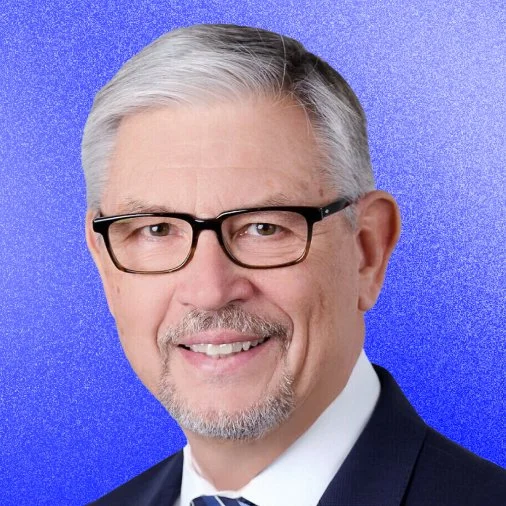
Alex Smith on Concussion: Why a 16-Year NFL Quarterback Backed OXE103
On a bright Sunday afternoon at Candlestick Park, Alex Smith took a hit.
He wasn't knocked out. He remembers the play clearly. But the moment he got up, something was wrong.
"I remember being so bright, and as it blurred my vision, something I tried to blink off, it would not go away," he said. He kept playing. He tried to tough it out.
"I remember throwing kind of completely blind. And somehow we scored."
That touchdown pass was the last play of his season. As he came off the field, his team's doctors pulled him. Colin Kaepernick stepped in. The San Francisco 49ers went to the Super Bowl. Alex Smith watched from the sideline.
That was 2012. And the treatment prescribed for his concussion? Rest. And wait.
"The treatment for concussions is the same as it's been 100 years ago," Smith said. "Just rest and wait. It's a giant void, a giant nothing."
In 2026, that still hasn't changed.
Four Concussions. Twenty-Five Years of Football.
Smith played quarterback in the NFL for 16 years, drafted number one overall by the San Francisco 49ers in 2005, then traded to the Kansas City Chiefs, then Washington. Before that: three years at the University of Utah. Before that: high school in San Diego.
His first concussion had nothing to do with football. He was 10 years old, skiing with his family in Utah, when an older skier plowed into him. He doesn't remember anything until ski patrol was there asking questions. He calls it the most serious concussion of his life. He had three more: one in college, two in the NFL. One of them very public.
By the time he retired, Smith was a father of three asking the same questions every parent of a youth athlete eventually asks: what do we do when this happens? What can we give them?
The answer, still, is nothing.
The Gap
The CDC estimates between 1.6 and 3.8 million sports and recreational concussions occur in the United States every year. Add falls, car accidents, military incidents, and unreported cases, and the total runs between 7 and 21 million annually.
Between 1.4 and 4.2 million of those people don't recover in the first few weeks. They carry symptoms for months or years: headaches, sleep problems, memory issues, mood and personality changes.
Zero FDA-approved drugs exist for any of them.
"Almost half of all traumatic brain injuries in this country come from falls," Smith noted. "Older adults, kids, construction workers, car accidents. Football is the loudest corner of this problem, but it's a much bigger pie."
This isn't just a men's problem, either. In soccer, girls are concussed at 1.76 times the rate of boys. In basketball, the female concussion rate is nearly twice that of male players. Half of the CDC's top 10 sports for concussion rates are girls' sports.
Why Oxeia
Smith joined Oxeia's board after being introduced to CEO Michael Wyand and co-founder Dr. Vishal Bansal, a trauma surgeon at Scripps in San Diego who sees concussion patients in his ER every week.
"This isn't just academic to him," Smith said. "This is the team that's behind this drug."
The science sealed it. Oxeia ran a Phase 2a trial at the University of Kansas Medical Center with patients within 30 days of a concussion who were still symptomatic, real patients with ongoing symptoms, not a controlled lab setting.
The result:
85% of patients on OXE103 responded positively, compared to 33% on standard care alone.
"From my seat on the board, two things are very clear," Smith said. "This is safe. And in the first human study, it worked."
To Oxeia's knowledge, this is the first meaningful clinical improvement ever reported for any concussion drug candidate.
What's Next
OXE103 is a peptide in the same biological family as the GLP-1 drugs now widely known for diabetes and weight loss, something the body produces naturally. Phase 2a was proof of concept. Phase 2b is the inflection point.
The next trial: 160 to 200 patients, multi-site, randomized, placebo-controlled. Top-line data expected by mid-2028. This is what Oxeia's current Reg CF raise on StartEngine is designed to fund.
"I'm not guaranteeing Oxeia is going to cure concussions," Smith said. "What I'm going to tell you is what the data shows, what the risk is, and what we're going to do over the next 18 months. Then you can decide."
"This is the trial that determines whether the kid who comes off the field with the headache, with his bell rung—I've been there—or the veteran, the service man or woman, the parent on the playground trying to help their kid. This is who we're working for."
Join the mission to bring the first FDA-approved treatment for persistent concussion symptoms to market.
Invest nowThis Reg CF offering is made available through StartEngine Primary LLC, member FINRA/SIPC. This investment is speculative, illiquid, and involves a high degree of risk, including the possible loss of your entire investment.
Oxeia Biopharma
The company is pioneering a new approach to concussion treatment with its first-in-class ghrelin therapy. Oxeia Biopharma's OXE103 aims to deliver therapeutic doses of ghrelin immediately post-concussion and has demonstrated an 85% responder rate at the Phase 2a trial at the University of Kansas Medical Center. Enrollment for the Phase 2b trial is planned to begin in 2026 with 160 patients.